
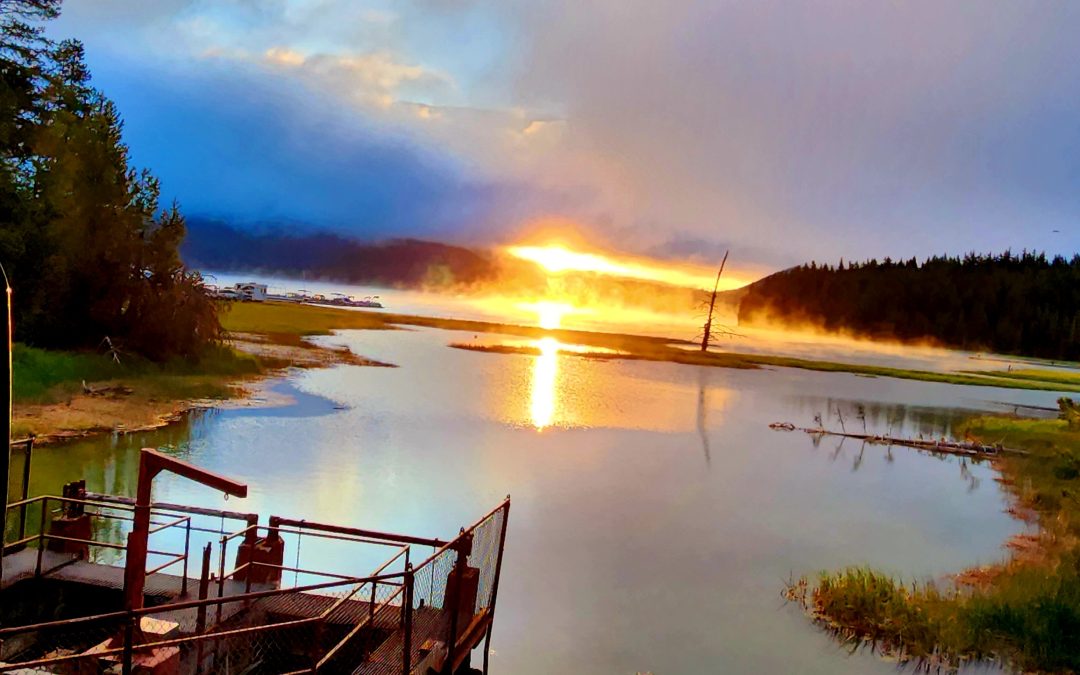
The History of Paulina Lake and Newberry Caldera
Nestled high in the Central Oregon Cascades at an elevation of over 6,300 feet, Paulina Lake is one of Oregon’s most unique and scenic fisheries. Along with neighboring East Lake, it sits inside the massive Newberry Caldera, a volcanic basin created by the eruption and collapse of the Newberry Volcano thousands of years ago. Today, the area is protected as the Newberry National Volcanic Monument, attracting anglers, hikers, campers, and geologists from around the world.
The Formation of Newberry Caldera
Newberry Volcano is one of the largest shield volcanoes in the contiguous United States, covering more than 1,200 square miles. Geologists estimate that volcanic activity in the region began around 500,000 years ago, with numerous lava flows and eruptions shaping the landscape over time. The most significant event occurred approximately 75,000 years ago, when a major eruption caused the summit to collapse, creating the six-square-mile caldera that now contains Paulina and East Lakes.
Later volcanic activity continued to shape the area. The Big Obsidian Flow, one of the youngest lava flows in Oregon, formed only about 1,300 years ago, leaving behind the dramatic black obsidian landscape visitors can still explore today. Natural hot springs along the shoreline of Paulina Lake are another reminder that the volcanic system remains active beneath the surface.
Early Human History
Long before European settlers arrived, Native American tribes, including the Klamath, Northern Paiute, and Wasco peoples, visited the Newberry area seasonally. They hunted game, gathered plants, and fished the lakes. The caldera was an important cultural and travel area, and archaeological evidence suggests humans have used the region for thousands of years.
Paulina Lake itself was named after Chief Paulina, a Northern Paiute leader who was well known throughout Central Oregon during the mid-1800s. Chief Paulina and his band traveled extensively through the region, and his name became permanently associated with the lake and nearby Paulina Peak.
The Fishing History of Paulina Lake
Unlike many lowland lakes, Paulina Lake’s fishery has been heavily influenced by fish stocking efforts over the last century. Before modern fish management, native fish populations in the lake were limited. As recreational fishing grew in popularity, state and federal agencies began introducing a variety of sport fish species to create one of Oregon’s premier mountain fisheries.
Rainbow trout were among the first fish stocked in Paulina Lake during the early 1900s, with Oregon fish managers planting hatchery fish to provide opportunities for visiting anglers. These stockings helped establish a strong trout fishery that remains popular today.
Brown trout were introduced shortly afterward, with stocking efforts beginning in the 1920s and 1930s. Brown trout adapted exceptionally well to the cold, deep waters of Paulina Lake. Over time, many of these fish became naturally reproducing, and today, Paulina is known for producing trophy-sized brown trout, with fish exceeding 20 pounds caught every year.
The introduction of kokanee salmon—the landlocked form of sockeye salmon—changed the fishery dramatically. Kokanee were first stocked in Paulina Lake in the late 1950s and early 1960s as Oregon sought to expand kokanee fishing opportunities across the state. The cold, nutrient-rich waters of the caldera proved to be ideal habitat, and kokanee populations flourished. Today, Paulina Lake is widely regarded as one of Oregon’s top kokanee fisheries, with healthy populations of hard-fighting fish known for their bright color and excellent table quality.
In addition to kokanee, the Oregon Department of Fish and Wildlife has occasionally stocked Atlantic salmon and experimented with other species over the decades. While some of these introductions were short-lived, they reflect the long history of fisheries management and efforts to create diverse angling opportunities within the caldera lakes.
Paulina Lake Today
Today, Paulina Lake is managed by the Oregon Department of Fish and Wildlife (ODFW) and remains one of the state’s premier destinations for kokanee, rainbow trout, and trophy brown trout. Modern anglers troll the lake’s deep, clear waters using downriggers and a variety of specialized kokanee tackle, while others target large browns by casting or trolling plugs and streamers.
The combination of fascinating volcanic history, crystal-clear water, abundant wildlife, and world-class fishing makes Paulina Lake truly special. Whether you’re there to chase a limit of kokanee, hunt for a trophy brown trout, or simply enjoy the beauty of Newberry Caldera, you’re fishing in a place where geology, history, and outdoor tradition have come together for thousands of years. For many Central Oregon anglers, a day on Paulina Lake is not just about catching fish—it’s about being part of one of the most remarkable natural landscapes in the Pacific Northwest.
James Hinton Day One Outdoors
(530) 334-0120
Dayoneoutdoors.com
Day One Outdoors operates under a special use permit with the Deschutes National Forest
Nice white up! good read!